
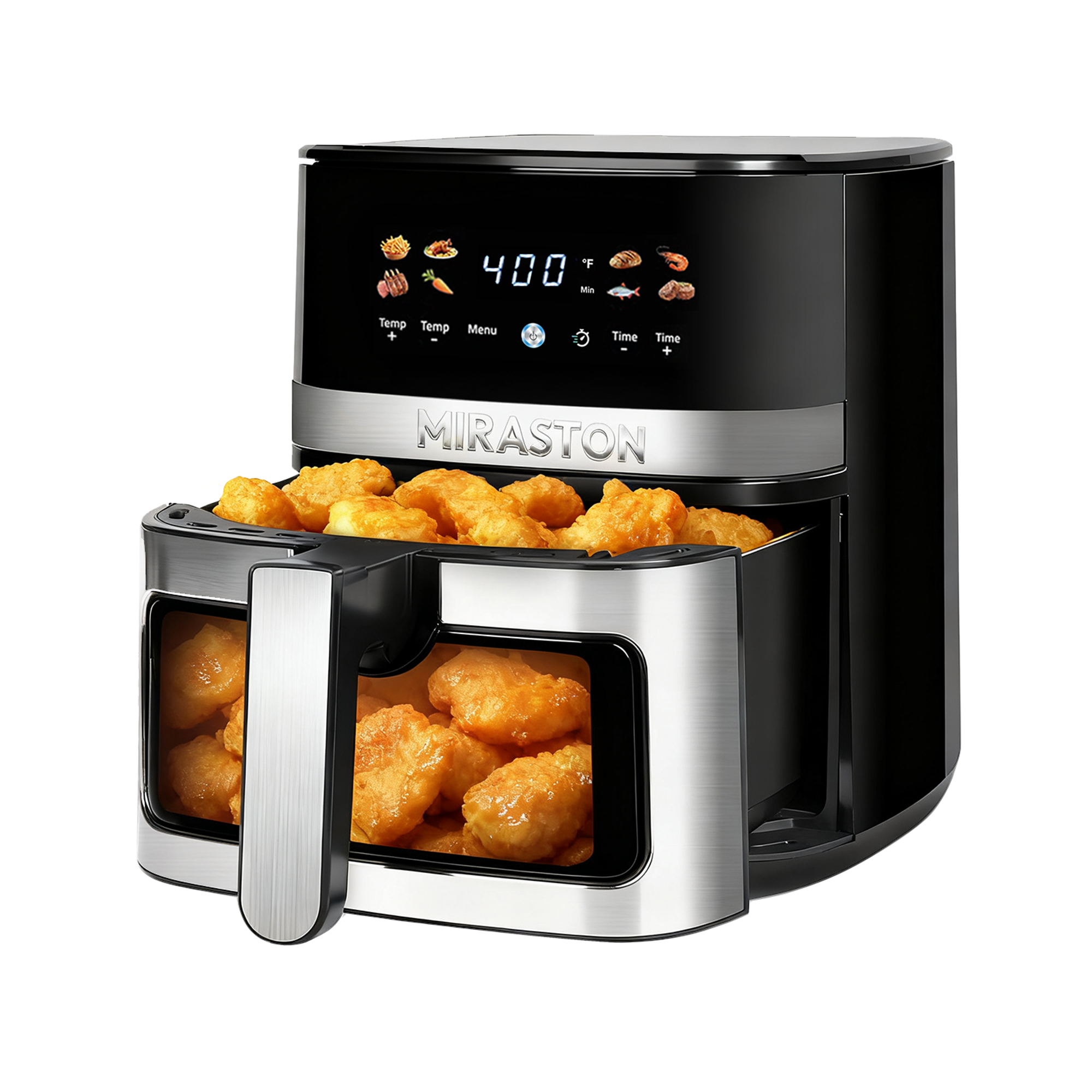
5L Air Fryer vs Microwave: Which Delivers Superior Performance for Quick Dishes
Understanding Kitchen Appliance Selection for Modern Cooking
When it comes to preparing quick dishes, many households face a crucial decision between investing in a 5L Air Fryer or relying on traditional microwave technology. Both appliances serve different cooking purposes and deliver distinct results. The choice between these two devices impacts not only cooking time but also food quality, nutritional value, and overall kitchen efficiency. Understanding the fundamental differences helps consumers make informed decisions that align with their cooking habits and lifestyle.
Cooking Speed and Time Efficiency
5L Air Fryer requires preheating time, typically ranging from 3 to 5 minutes before cooking begins. While this might seem like a disadvantage, the actual cooking process for most quick dishes takes 8-15 minutes. For instance, frozen french fries cook in approximately 12 minutes, chicken wings in 15 minutes, and vegetable skewers in 10 minutes. The high-speed air circulation technology ensures even heating throughout the cooking chamber.
Microwave offers instant heating capability with minimal preheating requirements. Reheating leftover pizza takes just 1-2 minutes, warming soup requires 2-3 minutes, and defrosting frozen items takes variable time depending on quantity. This immediate availability makes microwaves ideal for last-minute meal preparations and quick reheating tasks.
For time-critical situations, the 5L Air Fryer's preheating time can be a limitation. However, when cooking fresh ingredients or frozen items that require proper texture development, the 5L Air Fryer proves competitive or superior in total preparation time.
Food Quality and Texture Outcomes
5L Air Fryer produces crispy exteriors with tender interiors through rapid air circulation at high temperatures. This maillard reaction process mimics deep-frying results without excessive oil usage. Foods maintain their natural moisture, develop appealing golden-brown surfaces, and retain structural integrity. Dishes like chicken breast, fish fillets, and vegetable chips achieve professional-quality presentation and taste profiles that closely resemble traditional cooking methods.
Microwave employs electromagnetic waves that agitate water molecules, causing uneven heating patterns. This heating mechanism often results in rubbery textures, soggy surfaces, and inconsistent doneness across dishes. Reheated pizza becomes chewy or hard, warmed chicken breast turns dry, and vegetables lose their original texture. While microwaves excel at heating liquids uniformly, solid foods frequently suffer quality degradation.
The textural superiority of 5L Air Fryer technology directly impacts meal satisfaction and eating experience. Users consistently report preference for air-fried foods over microwaved alternatives.
Health Benefits and Nutritional Considerations
5L Air Fryer uses minimal oil—approximately 1-2 tablespoons for entire cooking operations. This significant reduction in fat content appeals to health-conscious consumers. The rapid air circulation mechanism produces golden-brown results through convection heating rather than oil absorption. Studies indicate that air-fried foods contain 70-80% less fat compared to traditional deep-frying methods while maintaining superior taste profiles.
Microwave cooking preserves certain heat-sensitive nutrients but offers limited control over moisture retention. The electromagnetic heating approach can cause uneven cooking that sometimes requires adding oil or butter for improved palatability, potentially negating health advantages. Additionally, microwave heating occasionally creates hot spots that destroy specific nutrients while leaving cold zones undercooked.
For individuals pursuing reduced fat intake and improved nutrition, the 5L Air Fryer represents a more health-aligned kitchen investment. The combination of minimal oil usage and improved food quality creates a compelling health advantage.
Versatility in Quick Dish Preparation
5L Air Fryer capabilities extend across diverse cooking applications. Users prepare frozen vegetables, fresh meats, fish, tofu, pastries, and even baked goods with consistent success. The 5-liter capacity accommodates family-sized portions in single cooking batches. Temperature flexibility ranging from 160°C to 200°C enables cooking adjustments for different food types. Specific cooking programs reduce guesswork and learning curves for new users.
Microwave functionality primarily centers on reheating, defrosting, and beverage warming. While microwaves can prepare certain dishes like mug cakes or steamed vegetables, the limited cooking applications create constraints. Microwave cooking cannot produce crispy textures, properly seared proteins, or appetizing caramelization. Defrosting capabilities, though available, often produce uneven results where edges cook while centers remain frozen.
The 5L Air Fryer's expanded versatility makes it suitable for preparing complete meals, whereas microwaves function best as supplementary heating devices for existing prepared foods.
Capacity and Portion Considerations
5L Air Fryer basket capacity accommodates 4-6 servings of most foods simultaneously. Families can prepare complete meals in single cooking sessions, reducing total preparation time through batch efficiency. The spacious 5-liter interior prevents overcrowding that compromises air circulation and cooking uniformity. Larger households find this capacity matches their nutritional requirements without requiring multiple cooking rounds.
Microwave containers impose significant size limitations. Most standard household microwaves require users to heat individual portions or divide family servings into multiple cooking cycles. Preparing meals for larger families involves sequential heating operations that extend overall preparation time and create temperature inconsistencies between early and later portions.
The 5L Air Fryer's generous capacity provides practical advantages for families prioritizing convenience and time efficiency in meal preparation.
Energy Consumption and Operational Costs
5L Air Fryer typically consumes 1500-2000 watts during operation, with average cooking sessions lasting 10-20 minutes. Monthly usage of 4-5 cooking sessions weekly translates to approximately 30-40 kWh monthly consumption. At typical electricity rates, monthly costs range from $3-5 for regular users.
Microwave draws 600-1100 watts during operation with shorter usage windows of 1-5 minutes per session. Extended usage of 15-20 sessions weekly accumulates approximately 20-30 kWh monthly. Comparable monthly costs typically fall between $2-4 depending on regional electricity pricing.
Energy cost differences remain minimal between these appliances. However, the 5L Air Fryer's superior food quality and cooking versatility provide better value proposition when considering overall kitchen utility beyond purely energy metrics.
Equipment Maintenance and Durability
5L Air Fryer requires regular basket and tray cleaning due to oil residue and food particles from the cooking process. Hand washing remains recommended despite dishwasher compatibility of most modern baskets. Annual maintenance typically involves checking heating elements and air circulation vents. Quality air fryers from established manufacturers frequently operate reliably for 3-5 years with proper care.
Microwave maintenance focuses primarily on interior cleaning and occasional vent clearance. The simpler mechanical design minimizes repair requirements. Microwave lifespan typically extends 8-10 years with standard usage patterns. However, component failures like magnetron burnout can render entire units non-functional.
While microwaves require less frequent cleaning, both appliances offer reasonable durability when properly maintained. The 5L Air Fryer's cleaning demands remain manageable for typical households.
Initial Investment and Long-term Value
5L Air Fryer entry-level models start around $40-60, with mid-range quality units available at $80-150 price points. Premium brands with advanced features command $200-350. This investment provides years of reliable service, improved food quality, and expanded cooking capabilities that justify the expenditure for serious home cooks.
Microwave basic models cost $60-100, with premium options reaching $200-300. While initial costs appear competitive with air fryer pricing, the limited cooking applications and reduced food quality outcomes suggest lower overall value proposition.
Evaluating total cost of ownership includes purchase price, energy consumption, maintenance expenses, and the subjective value of superior food quality. On this comprehensive basis, 5L Air Fryers offer compelling long-term investment returns.
Space Requirements and Kitchen Integration
5L Air Fryer dimensions typically measure approximately 10 x 8 x 5 inches with weight around 3-4 kg. While slightly larger than compact microwaves, modern kitchen designs increasingly accommodate dedicated air fryer storage. Countertop positioning remains feasible for most homes, and the appliance's aesthetic design complements contemporary kitchen aesthetics.
Microwave models range from compact 0.6 cubic feet units to full-sized models. Countertop space requirements can exceed air fryer footprints, particularly for over-the-range microwave installations. The ubiquitous microwave presence in modern kitchens has standardized space allocation across residential designs.
Kitchen integration considerations present neutral positioning between these appliances, with both requiring dedicated counter or installed space depending on specific household configurations.
Practical Applications for Quick Dish Categories
Frozen Foods Performance indicates clear 5L Air Fryer advantages. Frozen french fries, chicken nuggets, fish sticks, and vegetable items achieve superior crispness and texture compared to microwave alternatives. The air circulation mechanism prevents the moisture accumulation that microwaves produce.
Protein Preparation Demonstrates 5L Air Fryer superiority. Chicken breast, salmon fillets, and pork chops achieve proper cooking with attractive surfaces. Microwaves produce pale, rubbery results unsuitable for quality meal presentation.
Vegetable Cooking Shows mixed results for both appliances. The 5L Air Fryer produces crispy roasted vegetables with enhanced flavor development through caramelization. Microwaves excel at steaming vegetables for minimal preparation salads but struggle with crispy texture outcomes.
Reheating Applications Favor microwave efficiency for single portions and time-critical situations. However, the 5L Air Fryer increasingly serves this function while delivering superior texture preservation compared to traditional microwave reheating.
User Experience and Learning Curves
5L Air Fryer requires understanding temperature settings, preheating times, and cooking duration parameters. Most modern units include preset programs that eliminate guesswork. After initial orientation, users quickly develop proficiency. The straightforward operational concept appeals to cooking enthusiasts and beginners alike.
Microwave operation remains universally intuitive. Power level adjustments and timing inputs require minimal cognitive engagement. However, this simplicity does not translate to superior cooking outcomes.
Learning curve differences prove negligible in practical kitchen settings. Modern 5L Air Fryer interfaces increasingly rival microwave simplicity through intuitive touch controls and preset functions.
Noise Levels and Kitchen Environment
5L Air Fryer generates operational noise around 60-70 decibels from internal fan circulation. This sound level remains acceptable for most kitchen environments and does not exceed typical appliance noise thresholds. Noise duration corresponds to cooking time, typically 10-20 minute intervals.
Microwave produces approximately 50-65 decibels from magnetron operation and turntable rotation. Minimal noise generation appeals to noise-sensitive households, though the sound quality differs from air fryer acoustics.
Noise considerations present marginal differentiators between these appliances for typical residential kitchens.