
-0.png?w=1500&h=1500)
Can You Put Foil in an Air Fryer? Safety Rules & Alternatives
You just finished a batch of sticky barbecue wings. The food came out great, but the basket is covered in cooked-on sauce, and you wonder if you could line it with foil next time and skip most of the scrubbing. It is a fair question, and one that gets surprisingly conflicting answers. Some sources say foil is perfectly safe; others say keep it far away from any air fryer. The honest answer sits between those extremes. Yes, you can put foil in an air fryer, but only when you follow a few non-negotiable rules about placement, coverage, and what you are cooking.
The Short Answer: Yes, But With Conditions
Short answer: yes, with conditions. Foil will not melt in an air fryer. Most air fryers run between roughly 80°C and 200°C (175°F to 400°F), while aluminum foil only melts at about 660°C (1,220°F). The melting point is not the problem. The real risks are blocked airflow and direct contact with the heating element. Crumpled, oversized, or loose foil can be lifted by the fan, pressed against the heating element, and cause uneven cooking, smoke, or scorching.
That is why a responsible answer includes conditions instead of a flat yes or no. Used the right way, foil is a practical tool for easier cleanup.
How an Air Fryer Works: Why Airflow Matters More Than Heat
An air fryer is essentially a compact convection oven. A high-speed fan near the top of the chamber pulls air across a heating element and pushes it over the food at high velocity. That rapid circulation is what browns, crisps, and cooks quickly. A conventional oven relies mostly on radiant heat in a large open space, so a sheet of foil here and there barely matters. In an air fryer, airflow is the cooking mechanism. We explain how airflow impacts air frying results in a separate guide, but the key point is simple: anything that seriously interrupts airflow changes how the food cooks.
The Role of the Heating Element Placement
In most basket-style air fryers, the heating element sits close to the fan at the top of the chamber, not hidden under the floor like in many conventional ovens. The cooking area is small, so the gap between the food and the element can be only a few centimeters. That compact layout is why placement rules for foil are so strict. A wave of crumpled foil can end up closer to the element than you expect once the basket is pushed in.
What Happens When Foil Blocks the Airflow
When foil covers a large portion of the basket, hot air cannot reach the food evenly. The result is patchy browning, soft spots, cooking times stretching past the recipe, and food that is crisp on one side but steamed on the other. The fan keeps pushing air, but the air follows the path of least resistance around the foil. In extreme cases, a large loose sheet can be sucked up toward the heating element, which is the scenario behind most foil-related incidents.
5 Golden Rules for Using Foil in an Air Fryer
If you decide to use foil, make these five rules as automatic as setting the timer.
- Keep the foil flat and smooth. Crumpled foil creates turbulence in fast-moving air and gives the airflow something to catch. Press the sheet flat against the basket so it follows the basket contour instead of forming folded, ridged edges.
- Never let foil touch the heating element. Leave at least 2 to 3 cm (about 1 inch) of clearance between the foil and the element once the basket is fully inserted. When in doubt, check the gap with the basket in place before adding food.
- Weight the foil down with food. The food itself is the best anchor. For light reheating jobs, distribute pieces around the edges so the airflow cannot lift the sheet. If you want to confirm that the foil has not shifted, an air fryer with a viewing window
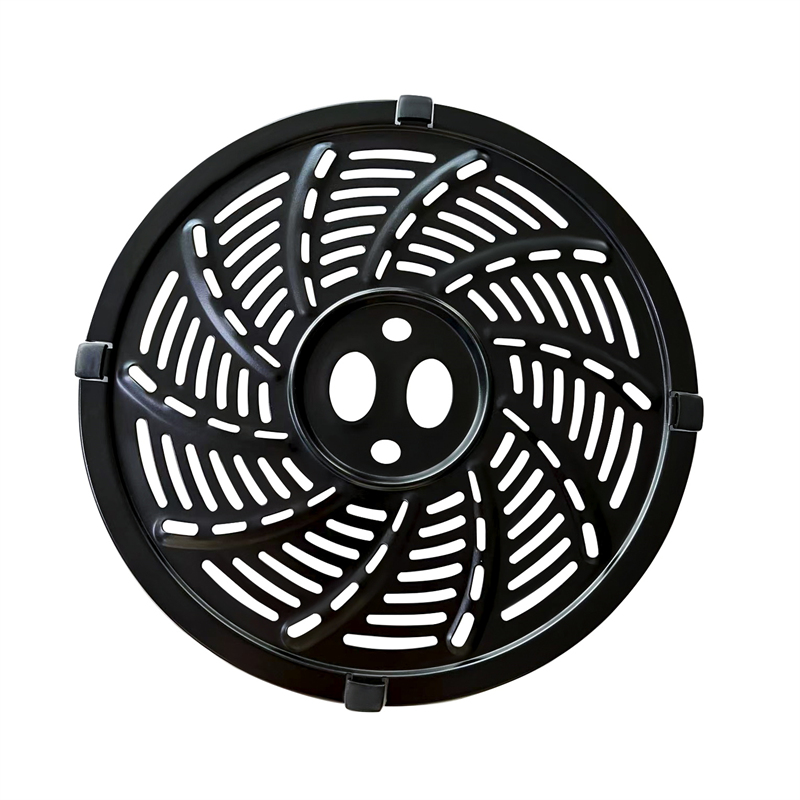
- Do not cover the entire basket. Leave at least one-third of the basket surface uncovered so heated air can circulate underneath and across the food. This rule is skipped most often, and it is the main cause of uneven results.
- Never preheat with foil inside. During an empty preheat cycle, nothing holds the foil down, and even a flat sheet can be lifted by the initial rush of air. Add foil after preheating, right before the food goes in.
When Foil Is a Great Idea (and When It Isn't)
Foil is not universally good or bad. It depends on what you are cooking and which type of air fryer you own.
Where Foil Saves the Day
- Fatty or saucy foods. Chicken wings, marinated drumsticks, and meatballs in sauce produce heavy drips. Foil catches them and keeps the basket significantly cleaner.
- Delicate or sticky foods. Fish fillets, cheese-topped sandwiches, and egg dishes tend to bond to the basket surface. Foil creates a release layer that prevents sticking.
- Small batches and divided portions. Fold foil into simple barriers to cook two different items side by side without mixing flavors.
- Reheating leftovers that are already wrapped in foil. A quick warm-up cycle works fine without transferring the food to another pan.
While the foil handles drips, the rest of the appliance needs care too. If you use a mechanical model, the manufacturer's safety tips for air fryer knobs and control panels cover simple habits that extend the life of the controls.
When to Put the Foil Away
- Acidic foods. Tomato-based sauces, citrus marinades, and vinegar-heavy glazes react with aluminum at high temperatures. The reaction can affect flavor and may cause tiny amounts of aluminum to migrate into the food.
- Recipes built for maximum crispiness. Fries, onion rings, and anything that needs a crunchy crust on the bottom rely on direct hot airflow. Foil blocks that airflow, so the underside may come out soft.
- Air fryer ovens and large-format models. These have more complex airflow paths and often multiple heating elements, so a large sheet of foil can disrupt circulation across several cooking zones. For example, large-capacity air fryer ovens with visible cooking chambersCustom DH-801 double air fryer with dual basket two dual zone deep electric airNingbo Dinghao Electrical Appliances Co., Ltd. is China Custom DH-801 double air fryer with dual basket two dual zone deep electric air ...View Product →rely on balanced airflow across the whole cavity, which makes foil placement more delicate.
If you use a model with a glass viewing panel, you may also notice splatters building up on the window over time. Our guide on cleaning an air fryer with a viewing window explains how to handle that without damaging the glass or the seal.
Foil vs. Parchment Paper vs. Silicone Mat: Which Is Best?
Foil is not the only option. Parchment paper and silicone mats are popular alternatives, and each one has strengths in different situations.
| Liner material | Typical heat tolerance | Best for | Main drawback |
|---|---|---|---|
| Aluminum foil | Melts around 660°C, far above any air fryer temperature | Wrapping food, catching heavy drips, making custom dividers | Blocks airflow if large or crumpled; not ideal with acidic ingredients |
| Parchment paper | Most brands rated around 220°C; always check the package | Non-stick baking, light cleanup, flat fit without pressing | Can scorch if it touches the heating element |
| Silicone mat | Most food-grade mats rated around 230°C | Reusable non-stick surface, exact basket fit, eco-friendly | Higher upfront cost; oil can seep underneath the mat |
For everyday basket lining, parchment paper is often the easiest choice because it sits flat without pressing and adds a non-stick layer. Foil still has a place when you are wrapping, shaping dividers, or handling a really messy marinade. Silicone mats are the long-term investment, but they need to match the basket size exactly to work well.
How Foil Affects Cooking Performance: Time, Crispiness, and Evenness
Let's be honest about the trade-off. Foil makes cleanup easier, but it also changes how air reaches the food. The most noticeable effect is reduced browning on the bottom. With a full sheet under the food, the underside does not receive the same direct hot airflow, so it stays paler and less crisp. Cooking time can stretch by 10 to 20 percent depending on how much of the basket is covered. If you line the basket, a practical compensation is to raise the temperature by about 10°C (15°F to 20°F) or add a few minutes, then check the food earlier than usual.
Digital preset programs add another consideration. Presets are calibrated with an open, unlined basket and standard airflow. Models such as the DH508A with 12 presets and the DH601A with 8 presets are tuned for that normal condition. When you add foil, the airflow changes, so the preset time may need adjustment. Understanding how digital air fryer temperature control systems work helps explain why presets assume a clear path for air. On a model such as digital air fryers with programmable cooking presets, foil usually still works, but treat the preset as a starting point and check the food earlier than the program suggests.
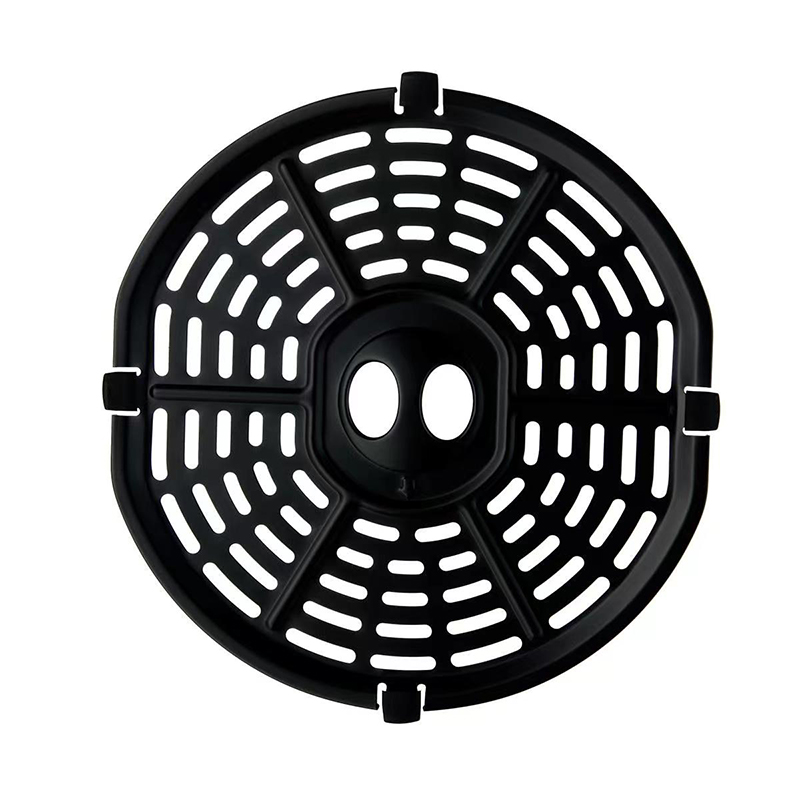
Does Foil Damage the Non-Stick Coating of Your Air Fryer Basket?
Foil itself will not scratch a healthy non-stick coating through normal contact; the material is soft and flexible. The real risk is wrinkled foil. When foil is creased, the folds become stiff edges. Under the vibration of the fan, or when you slide a spatula or tongs around, those edges can scrape the coating repeatedly. Over time, that kind of abrasion can wear thin spots in the non-stick layer.
It is also fair to say that non-stick coatings age naturally through heat exposure, detergents, and daily use. Foil often gets blamed for wear that would have happened anyway. The safest habit is to use one large, smooth sheet, press the edges down against the side of the basket, and never scrub with crumpled foil.
Quick Cleaning Bonus: Keeping Your Basket Spotless
Foil catches most of the oil and sauce, but not all of it. Small amounts of liquid can seep around the edges and bake onto the basket walls, so foil is not a replacement for normal cleaning. Our guide on effective ways to clean the inside of your air fryer lays out a full step-by-step routine; the basic habit is to wash the basket with warm, soapy water after every few uses and avoid harsh scouring pads.
Two small disposal notes: let the foil cool completely before throwing it away, and never put used foil into the dishwasher. It shreds into tiny pieces that clog the filter and stick to other dishes.
Final Verdict: Foil Is Fine, Common Sense Is Better
So, can you put foil in an air fryer? Yes, when you use it with common sense. Keep the sheet flat, keep it away from the heating element, weigh it down with food, leave at least a third of the basket uncovered, and never preheat with foil inside. Skip foil for acidic dishes and use extra care with air fryer ovens that have complex airflow. When you are unsure, parchment paper or a silicone mat will do the job safely. Foil in an air fryer is not a question of permission; it is a question of technique. If you have a specific model or a particular cooking habit you are unsure about, leave a comment and we will help you figure out the safest approach.