
How Long to Cook Salmon in Air Fryer (Time Chart)
Why Air Fryer Salmon Works So Well
Salmon is one of the best foods to cook in an air fryer, and once you try it, you will understand why. The high-speed fan pushes hot air around the basket, which does two jobs at once: it browns the surface quickly and locks in the moisture that keeps salmon tender. A fillet that needs 12 to 15 minutes in a conventional oven can be ready in roughly 10 minutes in an air fryer, with far less oil than a skillet would require.
The engineering behind that result is straightforward. How air fryers cook food explains the heating element and fan system that drive the circulation. For salmon, the key point is that rapidly moving air transfers heat faster than still hot air in an oven and more evenly than direct contact with a pan. That combination gives you the best of both cooking methods, a lightly crisp exterior and a tender interior, in well under 15 minutes. Salmon is also rich in Omega-3 fatty acids, so a low-oil cooking method keeps a healthy ingredient even lighter.
The Short Answer: How Long to Cook Salmon in Air Fryer
Cook a 1-inch salmon fillet at 400°F (200°C) for 8 to 10 minutes. If your fillet is thinner, start checking at 6 minutes. If it is closer to 1.5 inches thick, plan for 10 to 12 minutes. The number that truly decides doneness, though, is internal temperature: the thickest part should reach 145°F (63°C), the safety standard recommended by the USDA.
You will notice that published cooking times for air fryer salmon range from 7 to 15 minutes. Most of that variation comes down to three factors: fillet thickness, whether the fish was frozen, and the wattage of your machine. The chart below handles the thickness factor under standard conditions, and the rest of the article explains how to adjust for everything else.
Salmon Thickness vs. Cooking Time Chart
| Thickness | Cook Time | What to Look For |
|---|---|---|
| 1/2 inch (1.3 cm) | 6-7 minutes | Opaque all the way through, flakes easily |
| 3/4 inch (1.9 cm) | 7-8 minutes | Golden surface, moist center |
| 1 inch (2.5 cm) | 8-10 minutes | Internal temperature reaches 145°F (63°C) |
| 1.5 inches (3.8 cm) | 10-12 minutes | Check at 10 minutes, rest before serving |
These times assume a preheated air fryer. If you skip preheating, add 1 to 2 minutes and watch the color closely.
What Temperature Should You Air Fry Salmon At?
400°F (200°C) is the sweet spot for most salmon fillets. At this temperature, the surface caramelizes quickly enough to form a slightly crisp crust, while the inside cooks at a pace that keeps it from drying out. Dropping to 380°F (193°C) is a reasonable choice if you prefer a more delicate texture or you are cooking a fillet thicker than 1.5 inches, because the gentler heat gives the center more time to catch up.
Why does 400°F work so well? The heating element and fan work together to move hot air across the food at high speed. The hotter the air, the faster surface moisture evaporates, which is exactly what creates a browned, flavorful exterior. Push the temperature above 420°F (215°C) and the outside can scorch before the middle reaches a safe temperature, so resist the urge to crank it up for speed.
Manual and digital machines handle temperature differently. A dial model gives you a rough range, while how digital temperature control improves precision shows why a digital model holds a target temperature more consistently. If you are using a manual air fryer, aim for the middle of the dial and check your salmon a minute earlier than the chart suggests.
Step-by-Step: How to Cook Salmon in an Air Fryer
Step 1: Prep the Salmon
Pat the fillet dry with paper towels before doing anything else. Surface moisture is the enemy of browning; the drier the fish, the faster the crust forms. Whether you leave the skin on is your call. Skin-on fillets cook beautifully in an air fryer, and the skin usually releases from the basket without much effort. If you prefer skinless, that works too, just brush the flesh with a thin layer of olive or avocado oil so the seasoning sticks and the surface does not stick to the basket.
Step 2: Season Simply
Salt and black pepper are enough for a great result. From there, lemon zest, garlic powder, smoked paprika, or dill will take it in a new direction. If you want to use a sauce with sugar, such as teriyaki or honey mustard, brush it on during the final 1 to 2 minutes of cooking. Sugar burns quickly at 400°F, and adding it too early leaves you with a bitter, charred coating.
Step 3: Preheat (Recommended)
Preheat the empty basket for 2 to 3 minutes at 400°F before adding the salmon. This short step does two important things: it makes the timing chart more accurate because cooking starts immediately, and it helps prevent the skin from sticking. The science behind the second point is covered in why preheating your air fryer matters, but in short, a hot surface sears the skin on contact so it releases more easily.
Step 4: Air Fry, Skin-Side Down, No Flipping
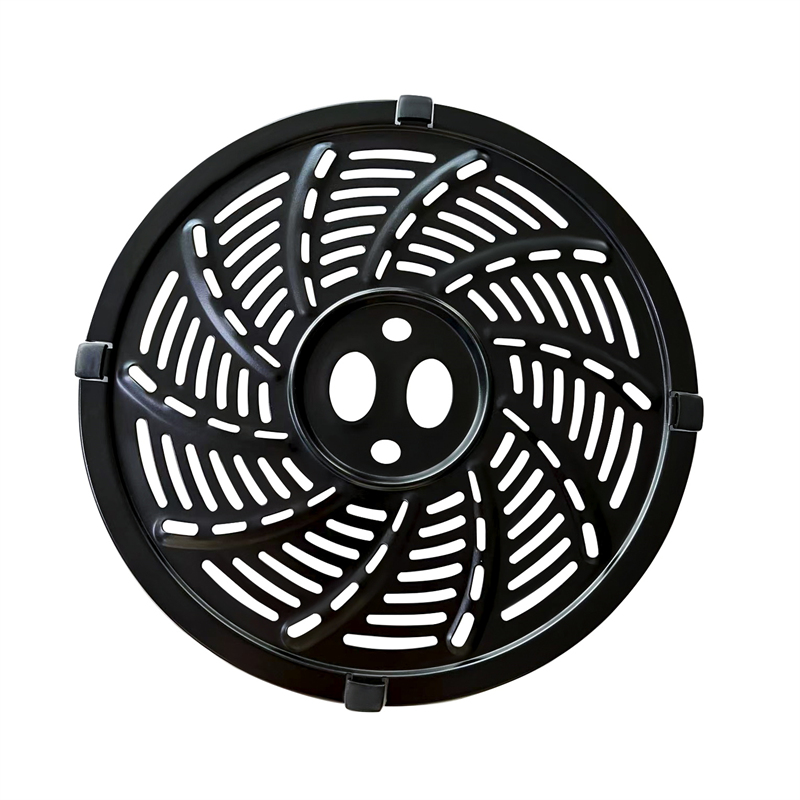
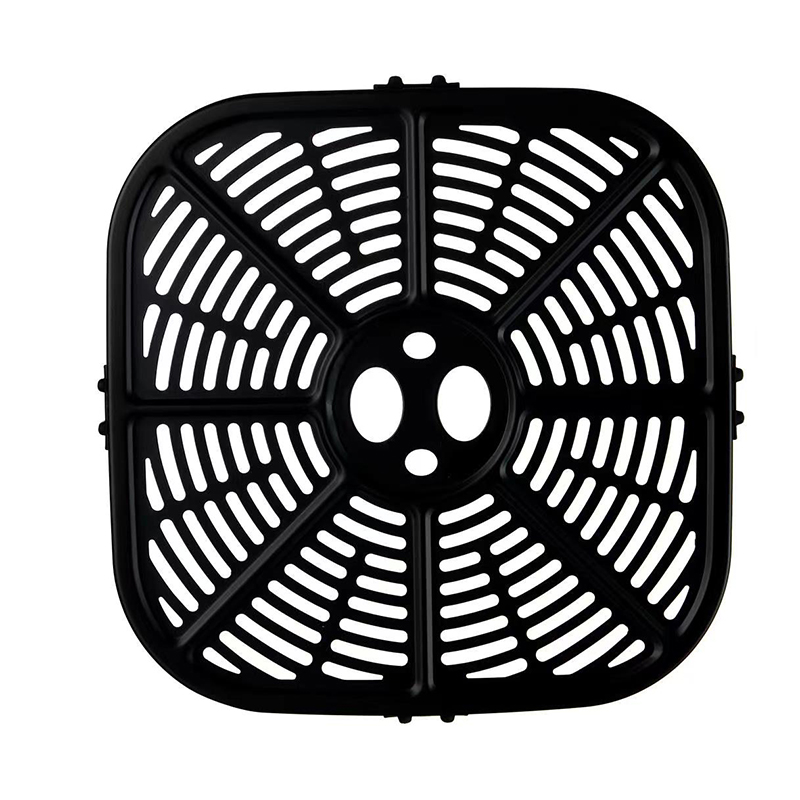
Place the fillet skin-side down and leave it alone for the entire cook time. The circulating hot air cooks the top surface evenly, so flipping is unnecessary and can break the fish apart. Do not overcrowd the basket either. Each fillet needs a little breathing room, because blocked airflow stretches the cooking time and creates uneven results. For more on spacing and airflow, tips for even heating in your air fryer walk through the practical details.
Step 5: Check Doneness with a Thermometer
Time is a guide, not a guarantee. The only reliable way to know your salmon is ready is to insert an instant-read thermometer into the thickest part. You are looking for 145°F (63°C). Without a thermometer, use these visual cues:
- The flesh changes from translucent to opaque all the way through.
- The fillet flakes easily when pressed with a fork.
- The surface shows visible golden-brown spots from the hot air.
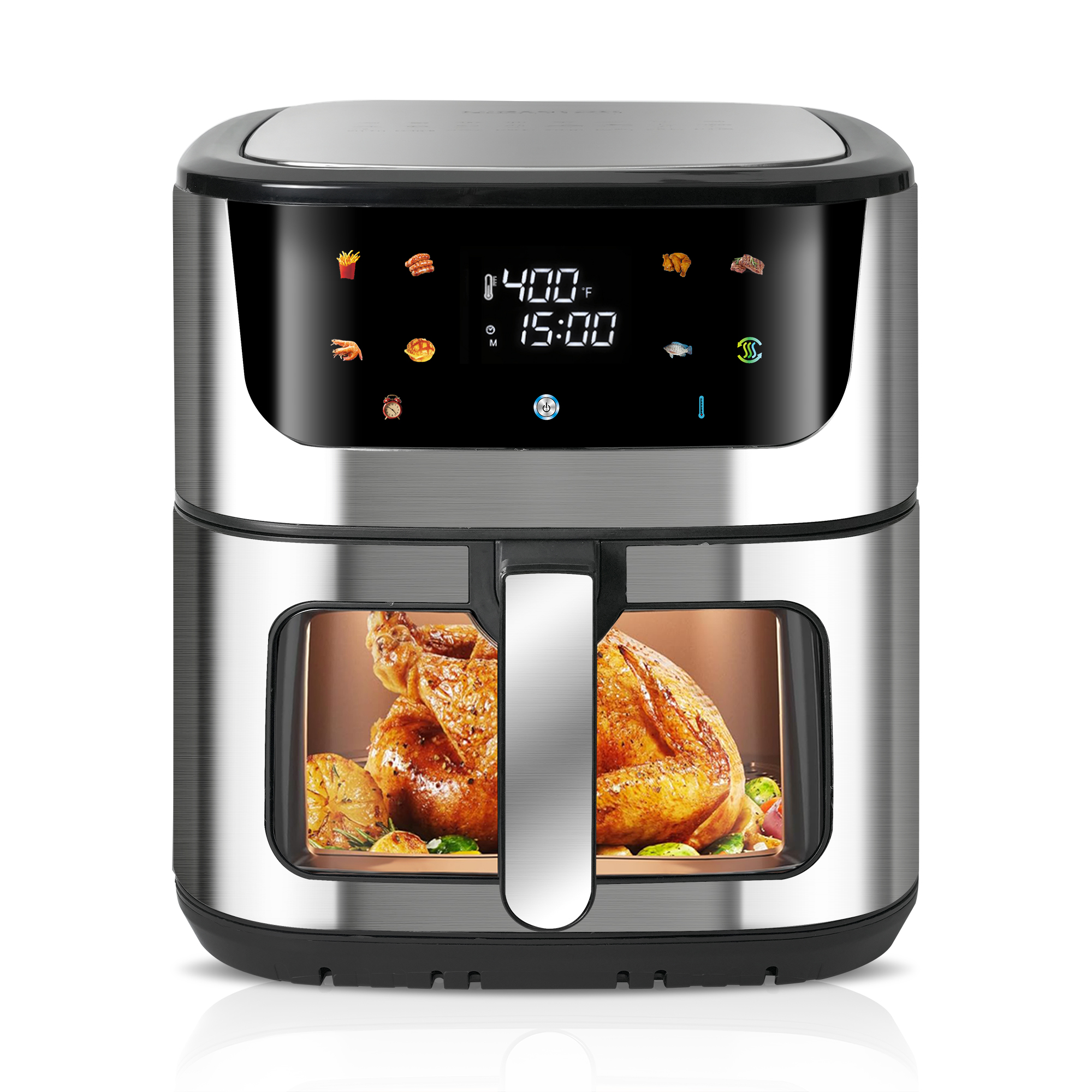
Remember that the fillet keeps cooking from residual heat after it leaves the basket, so pulling it at 140°F leaves you with a perfectly cooked piece by the time it rests. A model with a glass window makes this step much easier because you can watch the surface color change without opening the basket and losing heat. Air fryers with viewing windows let you catch the exact moment when the edges start to flake. If you are in the market, an air fryer with a viewing window is worth a close look.
How Long to Cook Frozen Salmon in an Air Fryer
You can cook salmon straight from the freezer, but it is not the best route. The outside cooks faster than the center, so you risk a dry exterior and a cold middle. If you have time, thaw the fillet in the refrigerator overnight, or put it in a sealed bag and submerge it in cold water for about 30 minutes. The refrigerator method takes 8 to 12 hours, so it works best when you plan ahead; the cold-water method is faster, but you should cook the fish immediately afterward.
If you go straight from freezer to basket, budget roughly 50% more time. At 400°F, a 1-inch frozen fillet needs about 14 to 16 minutes, and you should flip it once at the halfway point so both sides cook evenly.
| Thickness | Frozen Cook Time |
|---|---|
| 1/2 inch (1.3 cm) | 10-12 minutes |
| 1 inch (2.5 cm) | 14-16 minutes |
| 1.5 inches (3.8 cm) | 16-18 minutes |
4 Common Mistakes to Avoid When Air Frying Salmon
Mistake 1: Overcrowding the Basket
Packing too many fillets into the basket blocks hot air from circulating and turns a quick cook into a slow, uneven steam. Leave at least 1 to 2 cm of space between fillets, or cook in batches. If you regularly cook for a family, larger-capacity air fryers for batch cooking give you the room to handle two or three fillets at once.
Mistake 2: Cooking Straight from the Fridge
A fillet straight from the refrigerator throws off the timing. The exterior starts cooking while the center lags behind, which usually means the edges are overdone by the time the middle is safe. Let the seasoned fillet sit on the counter for 10 to 15 minutes before it goes into the basket.
Mistake 3: Using Too Much Oil or Sauce
Salmon is naturally fatty, so it needs very little added oil. A light brush or a quick spray is enough. Excess oil or an early sauce application will drip into the basket, smoke, and leave the surface soft instead of crisp. Save the glaze for the last minute or two of cooking.
Mistake 4: Guessing Doneness by Time Alone
Every air fryer runs a little differently, and one of the biggest variables is power. A 1500W model reaches temperature faster than a 1200W one, and the total cook time can shift accordingly. How air fryer wattage affects cooking time breaks down the numbers. Digital presets are a convenient starting point, and digital air fryers with preset cooking programs can remove a lot of guesswork, but your thermometer should always have the final say.
Serving Ideas and Flavor Variations
Air-fried salmon pairs well with a squeeze of fresh lemon and almost any simple side: steamed broccoli, roasted asparagus, rice, or quinoa. For variety, try these four flavor directions:
- Classic lemon-dill: lemon zest, fresh dill, and a little garlic powder before cooking.
- Teriyaki sesame: brush teriyaki on in the last minute, then finish with sesame seeds.
- Spicy Cajun: rub with Cajun seasoning and a pinch of cayenne for a smoky kick.
- Honey garlic: mix honey, minced garlic, and soy sauce, and brush on just before the salmon is done.
All four use the same 400°F baseline and the same time chart, so you can rotate through them without relearning anything. Leftovers keep well in the refrigerator for up to two days and can be flaked over salads for an easy lunch.
The air fryer is one of the most forgiving tools for fish once you understand how heat and airflow work together. Start with the times above, trust your thermometer, and adjust for your specific machine. If you want to dig deeper, the articles on this site cover preheating, even heating, power, and temperature control in detail.