
How to Use an Air Fryer: Step-by-Step Guide for Beginners
Why Learn How to Use an Air Fryer the Right Way
You just unboxed a new air fryer, loaded the basket with chicken wings, set 20 minutes at 200°C, and walked away. When you returned, half the wings were dry and the other half were undercooked. This is one of the most common beginner frustrations we hear about as an air fryer manufacturer—and it is almost always a matter of technique, not the machine.
The good news is that learning how to use an air fryer properly only takes a few minutes. Once you understand the interaction between temperature, airflow, and timing, you can go from food that is merely cooked to food that is crispy, juicy, and evenly browned on a regular basis. This guide walks you through everything from unboxing to cleaning, with the practical details that matter in a real kitchen. Beyond better meals, using the right technique reduces wasted ingredients and makes meal prep faster. Whether you own a basic manual unit or a digital air fryer with presets, the core logic is the same.
How Does an Air Fryer Work? (The 30-Second Explanation)
An air fryer is essentially a small, powerful convection oven. A heating element near the top generates heat, while a fan circulates hot air at high speed around the food. This rapid air circulation draws moisture away from the surface and triggers browning—the same reaction that gives deep-fried foods their crisp texture. Because the cooking chamber is compact, heat transfer is more concentrated than in a full-size oven, so food cooks faster.
You do not need to memorize engineering details to get great results, but understanding this basic principle helps you make better decisions about temperature and placement. For a closer look at the internal components and airflow design, you can read how an air fryer works internally.
What to Do Before Your First Use: Unboxing and Setup
Wash the Basket and Tray Thoroughly
During shipping, the basket, tray, and other removable parts can collect dust or manufacturing residue. Wash them with warm water and a mild dish soap, then dry them completely before putting them back. Use a non-abrasive sponge or cloth so you do not scratch the non-stick coating.
Place Your Air Fryer on a Stable, Heat-Safe Surface
An air fryer releases heat from the sides and bottom during operation. Leave at least 10–15 cm of free space around the unit and keep the ventilation openings clear. Set it on a stable countertop, away from curtains, paper towels, or other flammable materials. The unit should also not be placed near an open window where curtains might drift close and block the airflow.
Run a "Dry Burn" Before First Use
Before cooking any food, run the air fryer empty for 5–10 minutes at about 200°C. This burns off protective oils or manufacturing smells that can linger on a new appliance. It is a standard recommendation from appliance makers. If a strong odor continues after several uses, stop and contact the seller. Our factory designs products to meet international certification standards such as CE, UL, and ETL, but safe and consistent results also depend on correct first-use habits.
How to Use Your Air Fryer: Step-by-Step Instructions
Step 1: Prepare Your Ingredients
The size, thickness, and moisture content of your food directly affect the outcome. Pat meat dry with paper towels before seasoning, so the surface can brown properly. Cut vegetables into similar-sized pieces so that they cook at the same rate. Frozen foods usually need about 3–5 minutes longer than fresh items, so adjust your timing accordingly.
Step 2: Preheat Your Air Fryer (Does It Really Need Preheating?)
Preheating makes a visible difference for foods that rely on crispiness, such as french fries, chicken wings, or breaded fish. On a digital model, set the temperature and let the unit run empty for 3–5 minutes before adding the basket. On a manual model, turn the temperature dial to the desired setting and allow the same empty heating time. For foods with high water content, like broccoli or mushrooms, preheating is less important because they release moisture anyway. If you want to understand the technique in more detail, here is why preheating matters.
Step 3: Set the Temperature and Time (Digital vs Manual Controls)
Digital models often come with preset cooking menus that remove a lot of guesswork. Some air fryer models with 8 cooking presets let you select a food type, and the machine automatically applies a matching temperature and time. You can still override the values to your preference. If you own a digital unit, these digital air fryer tips will help you make the most of its presets
Manual models require you to set the temperature and the timer yourself. The temperature range on most units is roughly 80–200°C, and timers typically run from 1 to 30 or 60 minutes. Once you become comfortable with the dials, manual control air fryers with dual knobs give you the freedom to adjust on the fly, which is especially useful when you are adapting a recipe to your own machine. Keep in mind that the exact values vary by wattage and basket size.
Step 4: Shake or Flip the Food Mid-Cooking
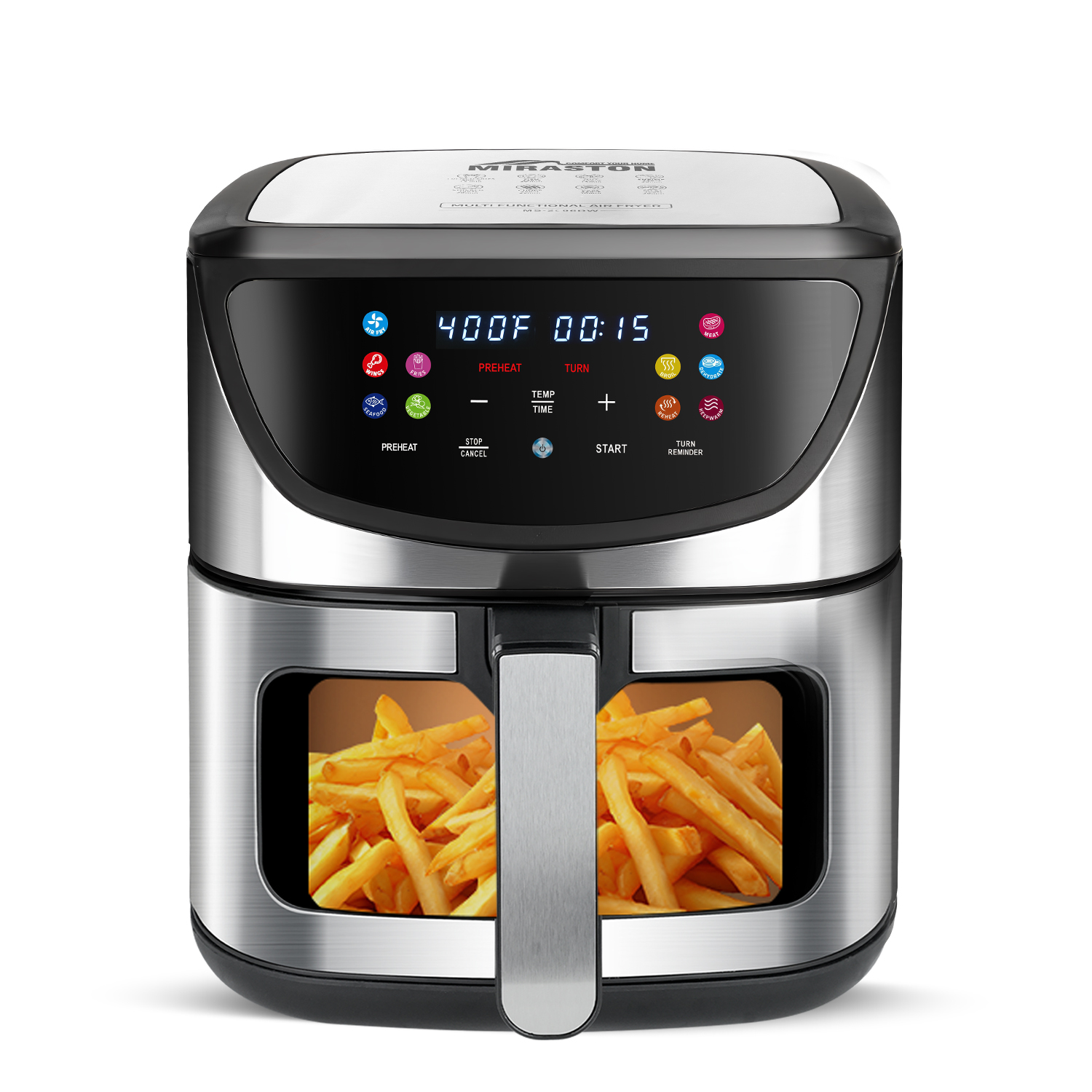
About halfway through the cooking time, pull out the basket and shake it, or flip larger pieces with tongs. This exposes all sides to the hot airflow and prevents uneven cooking. Most air fryers let you remove the basket without pressing pause; the hot air circulation resumes as soon as you slide it back in. If you want to monitor browning without opening the basket, air fryers with a viewing window let you see the food without losing any heat.
Step 5: Check for Doneness and Adjust
When you cook a new food for the first time, check it 2–3 minutes before the timer ends. Actual heating efficiency can differ between models because of wattage and air-flow design, so visual cues and an instant-read thermometer are more reliable than a fixed time. If the food is not quite done, return the basket and give it another minute or two—it is easier to add time than to undo overcooking.
The Golden Rules of Air Fryer Cooking (What Beginners Often Get Wrong)
Don't Overcrowd the Basket
This is the most important tip in any air fryer guide. Hot air needs room to move around every piece of food. If the basket is packed too tightly, the food steams rather than crisps, and the results are soft and uneven. Aim to fill the basket to 70–80% of its capacity at most, and use a single layer for items like fries, nuggets, or breaded cutlets.
A Little Oil Goes a Long Way (But Zero Is Not Always Ideal)
You can use no oil at all, but a light coating of 1–2 teaspoons will noticeably improve browning and crispiness. Use a spray bottle or a pastry brush to distribute the oil thinly and evenly. Pouring oil directly into the basket creates pools that can make food soggy.
Don't Be Afraid to Open the Basket Midway
Unlike a full-size oven, an air fryer loses very little heat when you open the basket. The compact chamber recovers temperature quickly, so feel free to inspect your food, shake it, or take a quick test bite. Opening the basket will not ruin the cooking process.
Cut Ingredients to Similar Sizes
Uniform pieces ensure that everything finishes cooking at the same time. For example, if you cut potato cubes in uneven sizes, the small pieces will burn on the outside while the large ones are still raw in the center. Investing a minute in even cutting saves a disappointing texture.
What Can You Cook in an Air Fryer? (And What Should You Avoid?)
An air fryer is a surprisingly versatile appliance, but it works better for some foods than others.
Great options include:
- Frozen french fries, chicken nuggets, and other frozen snacks
- Chicken wings, drumsticks, and thighs
- Steak and salmon fillets
- Vegetables such as broccoli, bell peppers, and pumpkin cubes
- Small baked goods, plus reheating leftover pizza or fried food
Use more caution with:
- Foods with a wet batter, which can splatter or get blown around
- Large whole chickens, which fit better in an air-fryer oven style unit
- Leafy greens like spinach, which may fly around in the strong airflow
Our product lineup covers compact 3L models for individuals and larger 6L family-size units, as well as models with viewing windows and air-fryer ovens. Choosing a capacity that matches your cooking habits helps you get the most from the appliance. You can also reheat food for a shorter time at lower temperatures to bring back crunch without burning.
Air Fryer Safety: What Every User Should Know
Air fryers are safe when used according to their design. Our products are engineered to meet international certification standards such as CE, UL, and ETL, but habits matter just as much as hardware. Follow these guidelines to avoid common risks:
- Do not preheat the basket with a paper liner inside. When the basket is empty and hot, a lightweight liner can be blown up against the heating element and catch fire.
- If you use a paper liner, make sure it is weighed down with food, and choose a liner specifically designed for air fryers.
- Never block the ventilation openings on the back or bottom of the unit while it is running.
- Clean accumulated grease from the basket bottom and the area around the heating element on a regular basis.
- Do not leave the air fryer running unattended for long periods, especially when cooking fatty foods.
These safety measures matter not only for your food, but also for your home. For additional guidance that focuses on smaller units, these safety tips for compact air fryers are worth reading before your next cook.
How to Clean Your Air Fryer (Without Damaging It)
Cleaning your air fryer is simple if you make it a habit. After each use, let the unit cool completely, then wash the basket and tray in warm soapy water. Most baskets are non-stick, so a soft sponge is all you need. Never immerse the main body or base in water; wipe it down with a damp cloth instead. Avoid metal brushes or abrasive cleaning pads, which can scratch the non-stick coating. Every few weeks, inspect the heating element and the surrounding area for grease buildup, and clean it while the unit is unplugged. For a more detailed walkthrough, see how to effectively clean the inside of an air fryer.
Final Thoughts: Air Frying Made Simple
The fundamentals come down to five habits: preheat when you want crispiness, don't overcrowd the basket, shake or flip halfway through, use a minimal amount of oil, and cut pieces evenly. Start with simple foods like frozen fries or chicken wings to build your confidence, then explore vegetables, fish, meat, and even baked treats. If you want a single reference that covers more air fryer topics in depth, bookmark the ultimate guide to air fryers for your next cooking session.