
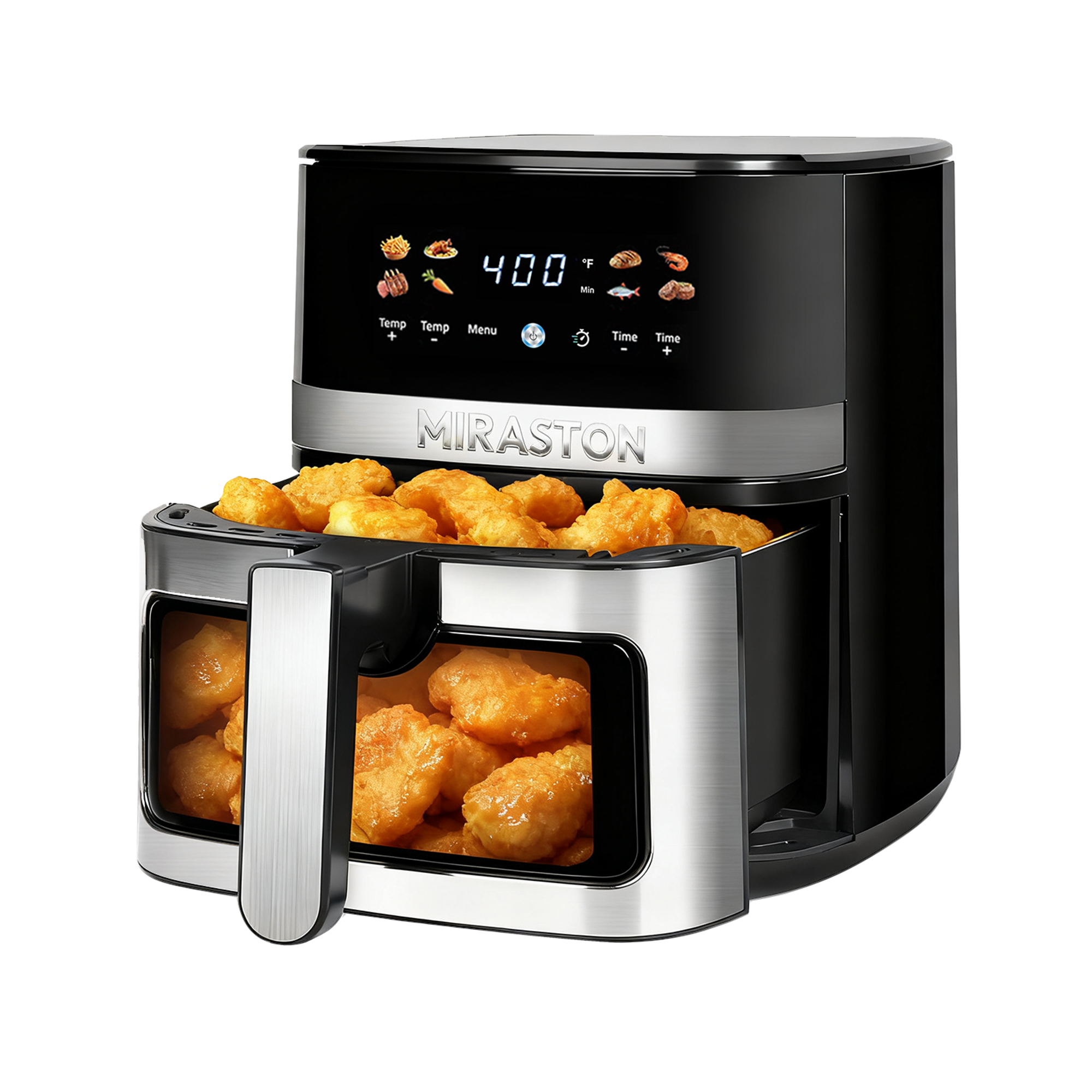
What Is the Best Compact Air Fryer for Small Kitchen
How Does a Compact Air Fryer Deliver Fast Cooking in a Smaller Space?
A compact air fryer is designed for users who want efficient hot-air cooking without placing a large appliance on the kitchen counter. Its reduced footprint, concentrated heating chamber and rapid air circulation make it suitable for apartments, small kitchens, hotel rooms, office refreshment areas and everyday household cooking.
Product performance depends on more than external dimensions. Basket geometry, airflow direction, heater output, temperature stability, internal insulation and safety protection all influence cooking speed, food texture and long-term reliability. Understanding these factors helps users select a compact appliance that matches actual cooking requirements rather than choosing only by appearance.
Suitable for individual meals, snacks, side dishes and small household portions.
Selected according to basket volume, target heating speed and regional voltage.
Covers reheating, roasting, crisping, baking and common frozen food preparation.
Provides practical cooking capacity while reducing countertop occupation.
What Is a Compact Air Fryer?
A direct explanation of the appliance structure and cooking principle.
Rapid Hot-Air Cooking
Users searching for what is a compact air fryer are generally looking for an appliance that cooks food through controlled hot-air circulation. An electric heating element raises the air temperature while a high-speed fan distributes heated air around the food basket.
The moving air removes surface moisture and transfers heat to the food from several directions. This process can create a browned or crisp outer layer without fully immersing the food in oil. A light coating of oil may still be used to improve color, flavor and surface texture.
Compact Internal Chamber
A smaller cooking chamber normally reaches the selected temperature faster than a large oven cavity. The reduced distance between the heater, fan and food basket also allows hot air to circulate through a shorter route.
This compact design can improve heating responsiveness, but it also requires accurate temperature control. An unstable thermostat may cause rapid browning on the outside while the center remains undercooked.
Compact Countertop Air Fryer Design Considerations
Important structural details that affect countertop use and daily cooking.
A compact countertop air fryer should save usable kitchen space without making the food basket too narrow. External width, depth and height must be considered together with basket shape, handle projection, rear ventilation space and the clearance required for opening the drawer.
Basket Shape
A square or rectangular basket usually provides a larger flat cooking area. A round basket may reduce the external width of the appliance but can limit the arrangement of bacon strips, fish fillets and sliced vegetables.
Air Outlet Position
Rear or upper air outlets must remain unobstructed. The appliance should not be pressed directly against a wall, cabinet panel, curtain or heat-sensitive surface during operation.
Control Method
Mechanical controls provide direct temperature and timer adjustment. Digital controls support more precise settings, cooking presets and clearer time monitoring.
| Capacity Range | Recommended Use | Typical Food Examples | Countertop Requirement |
|---|---|---|---|
| 1.5L–2.0L | Single-user portions | Toast, fries, bacon, small chicken portions | Very low |
| 2.1L–3.0L | One or two users | Chicken wings, vegetables, fish and snacks | Low |
| 3.1L–4.0L | Small household meals | Mixed vegetables, larger meat portions and side dishes | Moderate |
Typical Compact Air Fryer Product Parameters
Specifications should be evaluated as a complete system rather than isolated numbers.
| Product Parameter | Common Configuration | Practical Importance |
|---|---|---|
| Rated capacity | 1.5L–4.0L | Determines the approximate amount of food that can be cooked in one cycle. |
| Rated power | 800W–1500W | Influences heating speed, recovery time and electrical requirements. |
| Temperature range | 80°C–200°C | Supports low-temperature reheating and high-temperature crisping. |
| Timer range | 1–60 minutes | Provides sufficient control for snacks, meat, vegetables and baked food. |
| Basket coating | Food-contact non-stick coating | Helps reduce food adhesion and simplifies cleaning after use. |
| Safety protection | Overheat protection and automatic shut-off | Reduces risk during abnormal heating or incorrect operation. |
| Control type | Mechanical or digital | Affects setting accuracy, product positioning and operating experience. |
| Voltage options | Regional voltage and plug configurations | Allows products to match local electrical standards and market requirements. |
Why Capacity and Power Must Be Matched
A high wattage value does not automatically mean better cooking. Power must correspond to basket volume, airflow efficiency and thermostat accuracy. Excessive heater output in a very small chamber may cause rapid surface browning, while insufficient power may extend cooking time and reduce crispness.
How to Use Compact Air Fryer Appliances Correctly
A practical operating sequence for safer and more consistent cooking.
The question how to use compact air fryer appliances correctly is important because small cooking chambers respond quickly to temperature and loading changes. Correct placement, food preparation and basket loading help improve browning and reduce uneven cooking.
Position the Appliance
Place the unit on a flat, dry and heat-resistant countertop. Leave sufficient clearance around the air inlet and outlet. Do not operate the appliance below low cabinets when rising heat may affect nearby surfaces.
Prepare Similar-Sized Food Pieces
Cut vegetables, potatoes and meat into reasonably uniform sizes. Similar dimensions help the food reach the desired internal temperature at approximately the same time.
Avoid Excessive Basket Loading
Leave space for air to move between food pieces. A tightly packed basket can block circulation, increase cooking time and create pale areas where food overlaps.
Select the Temperature and Time
Begin with the recommended setting for the food type, then adjust according to portion size, thickness, moisture level and desired browning. Smaller portions may cook faster than standard recipe times.
Shake or Turn the Food
Shake fries, vegetables and small food pieces halfway through cooking. Use heat-resistant tongs to turn bacon, fish or delicate food that may break when the basket is shaken.
Check Doneness Before Serving
Thick meat and poultry should be checked at the center. External browning alone does not confirm that the internal portion has reached a safe and suitable temperature.
Do You Need to Preheat a Compact Air Fryer?
Preheating depends on food type, appliance design and the required surface texture.
Users frequently ask do you need to preheat a compact air fryer before every cooking cycle. Many small-capacity models heat quickly enough to cook frozen snacks and reheated food without a separate preheating stage. A few additional minutes can be added to the cooking time when food is placed in a cold basket.
Preheating is more useful for steak, fresh chicken, fish fillets and foods that need immediate high-temperature contact. Starting in a hot chamber can improve browning and reduce the time that moisture remains on the food surface.
| Food Type | Preheating Recommendation | Suggested Preheating Time | Reason |
|---|---|---|---|
| Frozen fries | Optional | 0–2 minutes | Frozen prepared food can usually begin cooking in a cold basket. |
| Frozen chicken pieces | Optional | 0–2 minutes | Cooking time can be extended slightly when preheating is skipped. |
| Fresh chicken wings | Recommended | 2–3 minutes | A hot chamber helps begin surface drying and browning quickly. |
| Steak or meat portions | Recommended | 3–5 minutes | Immediate heat supports better surface color and texture. |
| Toast and reheated food | Usually unnecessary | 0 minutes | These foods normally require only a short heating cycle. |
| Small baked items | Recommended | Approximately 3 minutes | A stable starting temperature improves baking consistency. |
Important Preheating Detail
Loose baking paper should not be placed in an empty basket during preheating. Strong airflow may lift lightweight paper toward the heating element. Baking paper should be added only when food is present to hold it securely in place.
Can You Cook Bacon in a Compact Air Fryer?
Temperature control and grease management are essential for high-fat food.
The search question can you cook bacon in a dash compact air fryer reflects a common concern about whether a small basket can handle fatty food. Bacon can be cooked in a compact appliance when the strips are arranged correctly and released grease is managed safely.
Food Arrangement
Place bacon in a single layer whenever possible. Long strips can be cut into shorter sections to fit the basket. Overlapping strips may cook unevenly because the covered surfaces receive less circulating air.
Temperature Range
A setting between 170°C and 190°C is commonly suitable. Thin bacon may require approximately 6–9 minutes, while thicker cuts may require about 9–13 minutes.
Grease Collection
Make sure the basket and drip area are installed correctly. Accumulated grease should not be allowed to contact the heating element or remain inside the appliance for repeated cooking cycles.
Smoke Reduction
Visible smoke may be caused by excessive temperature, old grease residue or an overfilled drip area. Regular cleaning and moderate temperature settings help reduce smoke and odor.
What Is the Best Compact Air Fryer for Different Users?
The best configuration depends on cooking quantity, food type and available space.
The answer to what is the best compact air fryer is not determined by one capacity or power rating. A suitable model should balance basket size, countertop footprint, airflow performance, control accuracy, cleaning convenience and safety protection.
1.5L–2.0L Configuration
Suitable for toast, fries, bacon, vegetables and small meat portions. A simple mechanical control system can provide straightforward operation and a compact external structure.
2.1L–3.0L Configuration
Provides more usable cooking area for chicken wings, fish fillets and side dishes while remaining convenient for limited kitchen counters.
3.1L–4.0L Configuration
Offers additional basket space for mixed ingredients and larger portions. A digital controller can provide more precise time and temperature adjustment.
Key Selection Criteria
A wider flat surface can be more valuable than a deep but narrow basket.
Stable temperature control helps prevent excessive browning and undercooked centers.
A removable basket and separate drip tray simplify oil and food-residue removal.
A well-insulated handle supports safer basket removal after high-temperature cooking.
Automatic power interruption can activate when the basket is removed or overheating occurs.
Efficient airflow should support cooking performance without excessive external surface heat.
Product Features That Improve User Experience
Practical product details can make a compact appliance easier to operate and maintain.
Optimized Airflow Channel
A balanced airflow path distributes hot air across the upper and lower areas of the basket. This can reduce cold spots and limit the need for frequent food repositioning.
Removable Cooking Components
A detachable basket and drip tray allow users to clean food-contact parts separately from the electrical housing.
Clear Control Interface
Easy-to-read temperature and timer markings reduce operating errors. Digital displays can provide visible cooking status and remaining time.
Heat-Resistant Housing
Internal insulation and suitable housing materials help reduce external heat transfer during operation.
Stable Non-Slip Base
Non-slip feet help keep the appliance stable when the basket is inserted, removed or shaken.
Flexible Product Configuration
Capacity, control panel, housing finish, rated voltage, plug type, packaging and labeling can be configured for different product requirements.
Foods Suitable for Compact Air Fryer Cooking
Small hot-air appliances perform best with food that benefits from surface drying and browning.
Recommended Food Types
Fries, prepared chicken pieces and similar foods can cook with limited preparation.
Broccoli, mushrooms, carrots and sliced potatoes can be coated with a small amount of oil.
Chicken wings, fish fillets, sausages and bacon are suitable when arranged with adequate spacing.
Pizza, bread and previously cooked fried food can regain part of their crisp texture.
Foods Requiring Additional Care
Loose liquid batter may drip through the basket before a stable coating forms.
Strong airflow may move lightweight leaves unless they are lightly coated or secured.
Melting cheese can pass through basket openings and create difficult-to-clean residue.
Large pieces may sit too close to the heating element or block circulation around the basket.
Cleaning and Maintenance Requirements
Regular cleaning supports heating efficiency, food quality and product service life.
Clean the Basket and Drip Tray
Wait until the appliance has cooled. Use warm water, mild detergent and a soft sponge. Metal brushes and abrasive cleaning materials may damage the non-stick surface.
Use a Short Soaking Period
Soak removable components in warm water for approximately 10–20 minutes. The electrical housing must never be immersed in water.
Check Air Inlets and Outlets
Dust, grease and food residue can restrict ventilation. Openings should remain clean and unobstructed to support stable cooling and airflow.
Watch for Electrical Abnormalities
Discontinue operation if the power cord is damaged, the plug becomes unusually hot, the fan produces abnormal noise or the unit repeatedly shuts down.
Frequently Asked Questions About Compact Air Fryers
Direct answers to common product and operating questions.
What is a compact air fryer used for?
It is used for cooking or reheating small portions of fries, vegetables, chicken, fish, bacon, bread and other foods that benefit from circulating hot air.
Is a compact countertop air fryer suitable for a small apartment?
Yes. A compact countertop air fryer is particularly suitable for kitchens with limited working space. Users should still reserve clearance around the air outlet and allow room for the basket to open.
How much food can a compact air fryer hold?
Capacity depends on basket volume and usable surface area. A 1.5L–2.0L basket normally suits individual portions, while a 3.0L–4.0L basket provides more flexibility for small household meals.
Do you need to preheat a compact air fryer for frozen food?
Preheating is often optional for frozen fries and prepared snacks. Cooking time may need to be extended slightly when the appliance starts from room temperature.
Can bacon be layered inside a small basket?
Bacon cooks more evenly in a single layer. Minor overlap may be acceptable, but tightly stacked strips can produce uneven texture and longer cooking times.
What makes the best compact air fryer easier to clean?
A removable basket, detachable drip tray, smooth internal surfaces and durable non-stick coating can reduce cleaning time and improve access to grease residue.
Compact Air Fryer Product Configuration Options
Product requirements can be developed around target capacity, control system and regional standards.
Available Configuration Areas
Selected according to portion size, countertop footprint and target user group.
Configured according to operating simplicity, temperature precision and product positioning.
Developed to match different kitchen environments and product appearance requirements.
Matched to the electrical requirements of the intended destination market.
Prepared with suitable language, operating instructions and product presentation.
Product structure and documentation can be developed according to applicable requirements.
Providing the following details helps define a suitable appliance configuration: