
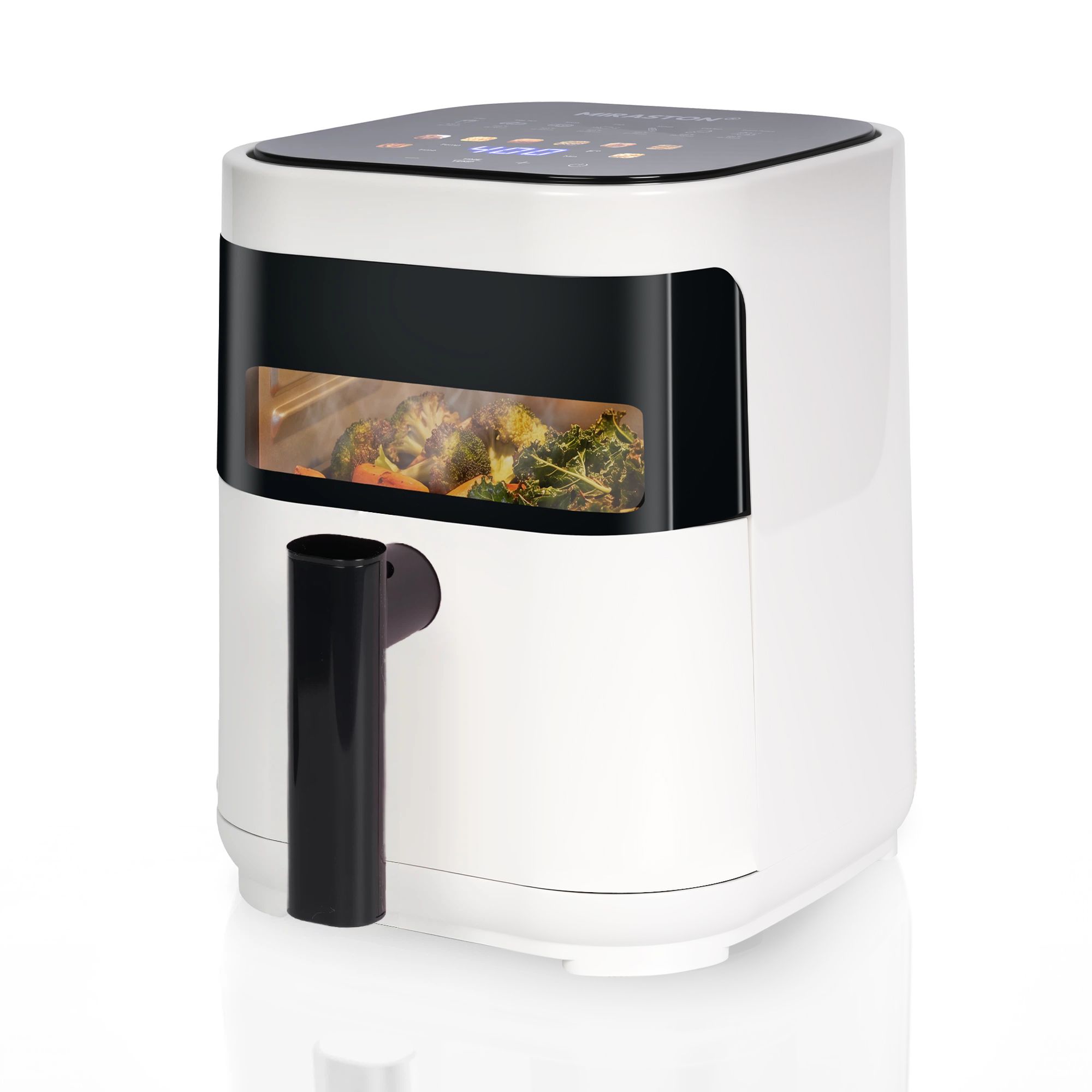
What Is the Best Small Air Fryer for a Compact Kitchen
With the trend of modern family structures becoming smaller and urban living spaces increasingly dense, traditional large kitchen appliances are undergoing a "downsizing" revolution. Among various modern kitchenwares, cooking equipment designed to meet the dietary needs of fewer people while balancing health and efficiency has received extensive attention. How to achieve high-efficiency and healthy daily cooking within limited countertop space has become a core concern for many consumers.
Spatial Challenges in Modern Kitchens and the Choice of High-Efficiency Equipment
In urban apartments or small houses, every inch of kitchen surface area is precious. Traditional cooking equipment is often bulky, not only occupying valuable countertop resources but also accompanied by a waste of energy and time when preparing small amounts of food. Therefore, small air fryer and various airfryer compact devices have emerged. These devices optimize the internal structure and the layout of heating elements to significantly reduce external volume while ensuring core cooking performance.
For singles, students, or two-person households, the emergence of mini air fryers perfectly solves the pain point of "small amounts of ingredients being difficult to cook." These devices utilize high-speed air circulation technology, allowing hot air to flow rapidly within a narrow cavity, thereby quickly locking in food moisture and achieving a crispy outside and tender inside effect.
Core Parameters and Technical Specifications Comparison
To help consumers more intuitively understand the differences between various types of small heating and cooking equipment, the following table compares mainstream compact devices on the market across multiple dimensions. This helps in making more targeted choices based on specific kitchen layouts and eating habits:
| Equipment Type/Technical Label | Typical Capacity Range | Core Heating Technology | Temperature Range | Countertop Space (Approx) | Scenarios and Target Audience |
| small countertop air fryer | 1.5L - 2.5L | High-speed Hot Air Convection | 80°C - 200°C | 25cm x 25cm | Personal apartments, quick light meals, low-oil frying |
| small digital air fryer | 2.0L - 3.0L | Precision Microcomputer Control + Hot Air | 40°C - 200°C | 27cm x 27cm | Those seeking precise taste, modern families needing preset timers |
| small oil fryer | 1.0L - 1.8L | Immersion Oil Heating | 130°C - 190°C | 22cm x 22cm | Those seeking traditional crispy texture, occasional deep frying needs |
| small commercial air fryer | 3.5L - 5.0L | Enhanced Commercial Thermal System | 60°C - 230°C | 32cm x 32cm | Small bars, studios, high-frequency continuous cooking needs |
In-depth Analysis: Functional Advantages of Different Small Cooking Devices
Integration of Smart Touch and Precision Temperature Control
In today's era of digital appliance popularity, small digital air fryer has become a popular choice in the market due to its intuitive operation interface. These devices are usually equipped with LCD or LED touch panels and built-in preset cooking programs for common ingredients (such as fries, chicken wings, baking, etc.). For cooking novices, digital control allows for precise adjustments to every degree and minute, greatly reducing the probability of food burning or being undercooked due to poor heat control.
Kitchen Aesthetics and Spatial Integration
In addition to functionality, modern consumers also pay attention to the appearance design of appliances. A small white air fryer can often easily blend into Nordic, Japanese minimalist, or modern minimalist kitchen decorations. White designs have visual extensibility, making an originally small kitchen appear cleaner and brighter. Combined with its exquisite shape as a small space air fryer, it will not look out of place whether placed in a corner of a cabinet or on the side of a dining table.
Difference Between Traditional Oil Frying and Air Frying
Despite the rapid popularization of air frying technology, some cooking enthusiasts still prefer the traditional crispy flavor. As a small fryer for home specifically designed for families, small oil fryer is extremely restrained in volume, usually requiring only a very small amount of cooking oil to complete high-quality deep frying. For the wider range of daily healthy family diets, the concept of air fryer home tends more towards oil-free or low-oil hot air cooking. The two have fundamental differences in working principles and the final fat content of the food.
How to Correctly Select Models Based on Actual Scenarios
When choosing a compact Air Fryer that suits you, in addition to considering appearance and capacity, you also need to evaluate your own frequency of use and the actual carrying capacity of the kitchen.
Consider Countertop Weight and Heat Dissipation Space: As a small countertop air fryer, although it occupies a small area, it needs to leave a certain heat dissipation distance (usually 10-15 cm) at its back and top when working. Therefore, the countertop size should be measured before placement.
Evaluate Frequency and Intensity of Use: If food is prepared at high frequency and continuously, or used in small entrepreneurial venues (such as independent cafes, light food stalls), ordinary household models may not be able to meet the heat load of long-term continuous work. In this case, a small commercial air fryer with higher durability and faster heating efficiency would be a more stable choice, as its internal heating tubes and fan motors are usually reinforced.
Cleaning and Post-maintenance: Regardless of the type of air fryer home equipment, the material of the inner liner (such as non-stick coating) and whether it supports split dismantling and washing directly determine the cleaning difficulty after cooking. Choosing a compact device with a split basket design can effectively shorten the time for after-meal tidying.